Asphalt shingles protect most homes in Kearny, and they usually fail one shingle at a time. Replacing damaged shingles promptly, and sealing their neighbors, is the most common and most cost-effective roof repair there is.
What kinds of shingle damage can be repaired?
Most shingle problems come in a handful of forms, and each has a different cause and a different fix.
| Damage | What you see | Cause | Repair |
|---|---|---|---|
| Missing shingles | Bare patch or exposed dark underlayment | Wind tore them off after the seal failed | Replace, nail properly, seal |
| Cracked shingles | Splits across the tab, often near the ridge or in cold weather | Age, thermal movement, impact | Replace the shingle |
| Creased or lifted tabs | A horizontal fold line, tabs standing up | Wind lifted unsealed shingles | Replace if creased, re-seal if only lifted |
| Curled or cupped shingles | Edges turning up or down | Aging, moisture, poor ventilation | Replace a few, or plan roof replacement if widespread |
| Blistering | Bubbles or dark spots | Heat and trapped moisture | Replace affected shingles, check attic ventilation |
| Exposed or popped nails | Nail heads visible, bumps under shingles | Nails backing out | Reset, replace, seal |
| Bruising | Soft spots, missing granules in dimples | Hail or impact | Replace bruised shingles |
How does shingle repair work?
A correct shingle replacement is more involved than it looks from the ground. Shingles overlap in courses, and each course is fastened through the shingle above. To remove one, the adhesive on the shingles above it has to be broken, the nails pulled out, and the damaged shingle slid free. Then the new shingle goes in, and it is fastened in the proper nail zone, not wherever is convenient.
Break the seal and lift the course above
A flat bar slides beneath the tabs to break the adhesive strip. Lifting carefully avoids cracking the neighboring shingles, especially in cold weather.
Remove nails and the damaged shingle
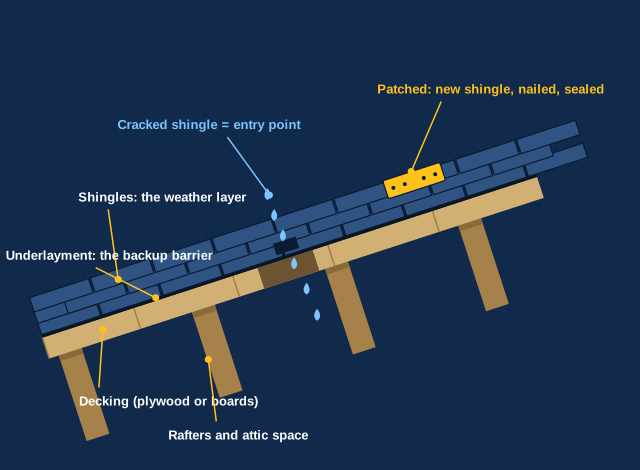
The nails holding the damaged shingle and the course above are backed out with the flat bar. The shingle slides free. Tears in the underlayment are patched at this point.
Install the new shingle
A matching shingle slides into place and is fastened with the correct number of roofing nails in the nail zone the manufacturer specifies. Nails are driven flush, not crushed or left proud.
Seal the tabs
Dabs of asphalt roofing sealant under the tab edges hold the new shingle and the raised course until the factory strip reseals.
Check surrounding shingles
Neighboring shingles are checked for creasing and lifted seals. A single missing shingle often means the ones around it are loose too.
Why do shingles fail on Kearny roofs?
Several forces work together. Sun bakes the oils out of asphalt over the years, leaving shingles dry and brittle. Freeze-thaw cycles crack and lift them, and temperature swings cause the material to expand and contract daily. Wind loads concentrate at corners, edges and ridges, especially on taller buildings with exposed rooflines. Poor attic ventilation makes it worse by driving heat up under the shingles.
Installation quality plays a part too. Nails driven high, missing nails, and shingles installed in cold weather that never sealed are all common reasons for a roof to start shedding shingles early.
What is the difference between repairing and replacing shingles?
Repair is the right call for scattered damage on a roof that is otherwise sound. It stops the leak and buys years of service. Consider replacement when these conditions appear together:
- Damage appears on multiple slopes rather than one area.
- Shingles tear or crack when lifted for repair, which means they are too brittle to work with.
- The granule loss is heavy and visible from the ground.
- You have made several repairs in the last few years.
If most of those apply, planning a replacement is usually better than paying for repair after repair. The roof patch repair page covers the decision in more detail.
How much does shingle repair cost in Kearny?
Shingle repair is usually the least expensive kind of roof repair, and the price rises with the number of shingles and how hard the roof is to work on. These are estimated ranges, not quotes.
| Shingle job | Estimated range | Notes |
|---|---|---|
| Replace one to a few shingles | $250 to $800 | Includes sealing and checking neighbors |
| Wind-damaged section (about 10 by 10 feet) | $600 to $1,500 | More shingles, more nailing and sealing |
| Ridge cap or valley repair | $300 to $1,500 | Valleys with metal work run higher |
| Storm damage across a slope | $1,500 to $4,000+ | May include underlayment and decking repair |
How to read these numbers
These are ballpark estimates for planning, not quotes. They draw on published 2026 U.S. repair-cost ranges, and northern New Jersey labor rates often land toward the upper end. Your actual price depends on access, roof height and pitch, materials, how much wood is wet, and weather. It is confirmed in a written estimate after the inspection and before any work starts.
What does shingle damage cost you if you wait?
Under every shingle is a layer of underlayment, and beneath it, decking. Underlayment is designed as a backup, not as a primary roof covering. When shingles are missing, water and sunlight attack it directly. Once it fails, water reaches the wood. The cost of shingle repair is small compared with the cost of replacing rotted decking, wet insulation and interior finishes.
Repairing damaged shingles quickly also protects the shingles around them. Lifted edges catch wind, and a single missing shingle starts a chain reaction of tearing.
Can I repair shingles myself?
Small jobs are possible, but they carry real risk. Roofs are dangerous places, and working on a sloped roof without fall protection causes serious injuries. Cold weather cracks shingles, and improper nailing or sealing produces a repair that fails in the next storm. Hiring a professional to do the repair and look over the rest of the roof at the same time is usually the safer and cheaper choice.
How do you keep shingles in good shape?
- Check the roof from the ground after storms, using binoculars if needed.
- Clean gutters so water doesn't back up under shingle edges.
- Trim overhanging branches that scrape and drop debris on the roof.
- Keep the attic ventilated to reduce heat and moisture buildup.
- Book a yearly roof inspection.
For leaks that begin at a shingle, see roof leak repair. For storm damage that happened in the last day or two, see emergency roof repair.
How do shingle type and roof age change the repair?
Three-tab shingles are thinner and flatter. They are easier to lift and slide but crease more readily in the cold. Architectural (laminated) shingles are thicker and stiffer, which resists wind better but makes each replacement a bit more involved because the layers must be lined up with the pattern of the course above.
Age matters as much as type. On a roof in its first decade, a replaced shingle is a clean, quick fix. On an older roof, the surrounding shingles may be brittle enough to snap when lifted, which is a warning sign in itself. A roofer who has to sacrifice several good-looking shingles to reach one damaged one is telling you something about the roof's remaining life.
What should you expect on the day of the repair?
A typical shingle repair visit starts with a walk of the roof to confirm the scope. The crew protects landscaping and walkways, makes the repair, sweeps the ground and gutters for nails, and checks the surrounding area. You should be told what was found, what was replaced, and whether other areas are worth watching. Photos of the repaired area are useful for your records and for any insurance claim.
Weather is the main variable. Wet shingles are slippery and won't seal, so a rain delay means the repair is done as soon as the roof is dry.
Where do we do shingle repair?
We repair shingle roofs across Kearny, NJ (ZIP codes 07032 and 07099) and in nearby Hudson County neighborhoods, from rowhouses to detached homes. See the service areas for details.
Frequently asked questions
Can I replace just one damaged shingle?
Yes. Individual asphalt shingles can be removed and replaced without touching the rest of the roof. The work involves lifting the shingles above, removing the nails, sliding in a new shingle, and nailing and sealing it correctly. As a rough estimate, replacing one to a few shingles costs about $250 to $800.
Why are shingles blowing off my roof?
Usually because the adhesive strip has stopped sticking. Shingles seal to each other with a heat-activated strip. As the strip ages, gets dirty or never sealed properly, wind can lift the tabs, crease them, and eventually tear them off. Nails driven too high or too few nails make it worse.
Are curled shingles a sign I need a new roof?
A few curled shingles can be replaced. Curling across whole slopes means the shingles are aging out, and repair becomes a short-term fix. An inspection tells you which case you have.
Can shingles be repaired in cold weather?
They can, but carefully. Cold shingles are brittle and can crack when bent, and the adhesive strip may not seal until warmer weather. Hand-applied sealant dabs are used to hold the tabs down until the strip activates.
Will new shingles match my old ones?
They will be the same style and the closest available color. Weathered shingles fade, so a new shingle may look slightly different at first. It doesn't affect performance and evens out over time.
What is the difference between three-tab and architectural shingles?
Three-tab shingles are flat, single-layer and lighter. Architectural shingles are thicker and laminated, giving a dimensional look and typically better wind resistance. Repairs use the same type as your existing roof.
Do granules in my gutters mean the roof is failing?
Some granule loss is normal on a new roof. Heavy or growing granule loss on an older roof suggests the shingles are wearing out. It is a reason for an inspection, not an emergency.
How do I know if hail or wind damaged my shingles?
Look for creased tabs, missing pieces, exposed nail heads, dented vents, and bruised spots that feel soft. Damage can be hard to see from the ground, so a professional inspection is worth doing after a big storm.